

Home service businesses, plumbers, electricians, HVAC contractors, roofers, landscapers, handymen, pest control, and more, share a common challenge: competing for visibility in local search as service area businesses without traditional storefronts. This guide covers the universal principles that apply across all home service trades, regardless of your specific specialty.
The home services market is massive, over $600 billion annually in the US alone, and the shift to digital discovery is accelerating. More than 90% of homeowners start their search for a service provider on Google. If your business isn't visible in the Map Pack, you're relying entirely on referrals and paid ads. Local SEO creates a compounding asset that generates leads month after month without ongoing ad spend.
The Service Area Business (SAB) Challenge
Most home service companies are service area businesses, you go to the customer's home. This creates a specific Google Business Profile challenge: Google's algorithm strongly favors proximity between the searcher and the business address. If your business address is in one city but you want to rank in 15 surrounding cities, you need to build strong local signals in each target area through city-specific content, reviews from clients in those cities, and citations that reinforce your service area.
Never create fake GBP listings at different addresses to rank in multiple cities. Google actively detects and suspends these listings, and a suspension can take months to resolve. Instead, build your service area legitimately through the strategies outlined in this guide.
Google Local Services Ads Integration
Google Local Services Ads (LSAs) appear above the Map Pack for home service searches, making them a critical part of the visibility equation. While LSAs are paid ads (not SEO), they interact with your organic presence. Businesses with strong review profiles on their GBP get better LSA placements at lower costs. The "Google Guaranteed" badge from LSAs also increases trust on your organic listing. Consider LSAs as a complement to your local SEO strategy, not a replacement.
Universal GBP Optimization for Home Services
Essential GBP elements for every home service business
- **Primary category**, Use the most specific category that matches your trade ("Plumber" not "Home Improvement").
- **Service area**, List every city you serve individually rather than using a radius. This gives you more control over which searches trigger your listing.
- **Services list**, Add every service with descriptions and price ranges. This data feeds directly into Google's search matching algorithm.
- **Business description**, 750 characters. Include your primary service, city, years of experience, license number, and key differentiators.
- **Photos**, Upload 10+ photos monthly. Include your team, vehicles, completed projects, and your business license/insurance certificates.
- **Q&A section**, Seed 10-15 common questions and answers. These appear on your listing and influence search relevance.
- **Weekly GBP posts**, Post updates about completed projects, seasonal tips, and promotions. Activity signals freshness to Google's algorithm.
Schema Markup Strategy for Home Service Companies
Every home service business should implement structured data using the most specific schema type available for their trade. Use `Plumber`, `Electrician`, `HVACBusiness`, `RoofingContractor`, `LocksmithService`, `PestControlService`, or `MovingCompany`, Google recognizes all of these as distinct local business schema types. Include `areaServed` with specific cities, `openingHoursSpecification` including emergency availability, and `hasOfferCatalog` with each service listed. Add `Review` and `AggregateRating` schema to display star ratings in search results.
Competing Against Lead Generation Platforms
HomeAdvisor, Angi, Thumbtack, and other lead generation platforms dominate organic search results for many home service queries. They have massive domain authority and budgets you can't match. But they have a critical weakness: they cannot rank in the Google Maps Pack. The Map Pack appears above organic results and captures the highest-intent clicks. Focusing your SEO investment on Map Pack visibility lets you compete where these platforms literally cannot. Every dollar spent on local SEO builds an asset you own, while lead platform fees are an ongoing cost with no equity.
Multi-City Service Page Architecture
Build individual service pages for each city in your service area, following this structure: /services/[service-type]/[city-name]. Each page must contain genuinely unique content, not template pages with swapped city names. Include references to specific neighborhoods, local building codes, completed projects in that area, service area maps, and driving time from your base. Google penalizes thin city pages, so each page should be 800-1,200 words with original, locally relevant content.
Review Strategy for Home Service Companies
Reviews are the currency of home services. Homeowners choose service providers based on star ratings and review volume more than any other factor. Integrate your review management process into your operational workflow: when a technician marks a job complete in your dispatch system, trigger an automated text with a Google review link. The text should come from the company (not a generic platform), reference the specific service performed, and include a direct link. Track review velocity by technician, technicians who generate more reviews are creating more business value.
Locafy's Localizer is purpose-built for home service businesses. We handle GBP optimization across your entire service area, build citations on 60+ directories, deploy trade-specific schema markup, and monitor your review profile. Book a free strategy call or see pricing.
Home Service SEO FAQs
What's more important for home services: Map Pack or organic rankings?
Map Pack, without question. For home service searches, the Map Pack appears at the top of results and receives the majority of clicks. Organic results appear below and are often dominated by directory sites (HomeAdvisor, Angi) that you can't realistically outrank. Focus 80% of your SEO effort on Map Pack signals: GBP optimization, reviews, citations, and proximity-building through city-specific content.
How do I handle multiple service areas with one GBP listing?
List all service areas in your GBP settings and build individual city service pages on your website. Get reviews from clients in each target city, Google uses review location as a strong proximity signal. Build city-specific citations where possible. Consider Locafy's Localizer product, which is specifically designed to expand visibility across large service areas.
Should I still use HomeAdvisor/Angi while building my SEO?
Yes, treat lead platforms as a bridge while your organic visibility builds. But track your cost per lead from each source. Most home service businesses find that within 6-12 months of SEO investment, their cost per lead from organic search drops below platform lead costs. At that point, you can reduce platform spending and reinvest in SEO for compounding returns.
How fast can a new home service business rank in the Map Pack?
A new business with no existing online presence typically starts seeing Map Pack visibility within 90-120 days of implementing comprehensive local SEO. Businesses with existing review profiles and citations can see improvements faster. Competitive markets may take 6+ months. The key is building multiple signal types simultaneously, GBP, citations, reviews, content, and schema, rather than focusing on one in isolation.
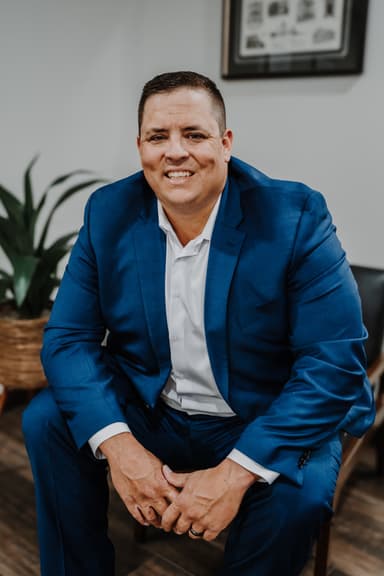
Written by
Jason JacksonChief Operating Officer, Locafy Limited
COO at Locafy (Nasdaq: LCFY). Builds and operates AEO systems for local businesses. Founded Growth Pro Agency before joining Locafy via acquisition.