
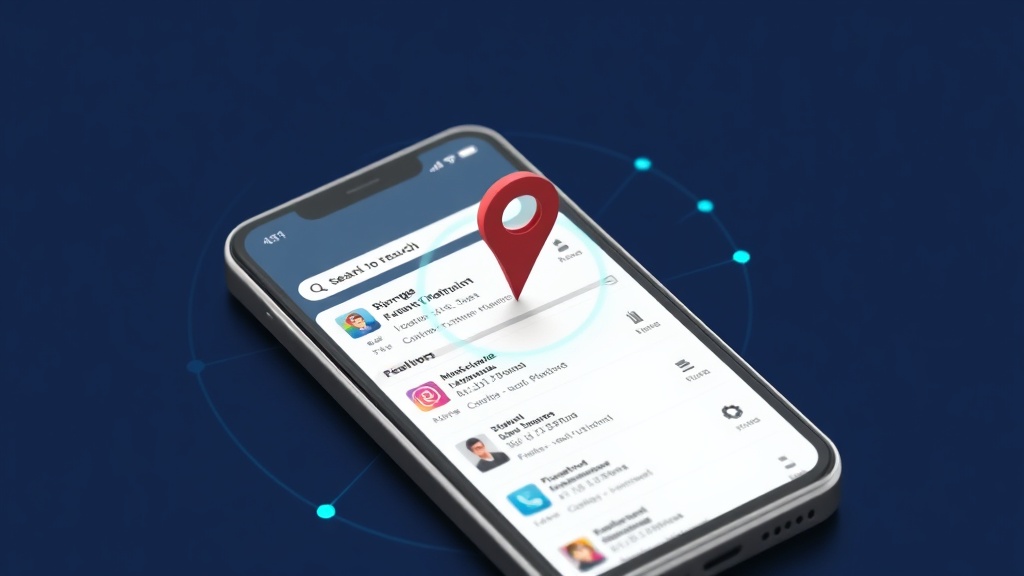
"Near me" searches represent some of the highest-intent traffic in all of search. When someone types "plumber near me" or "coffee shop near me," they're ready to buy -- 76% of people who search for something nearby visit a business within a day, and 28% of those searches result in a purchase. These queries almost always trigger the Map Pack, making them a direct pipeline to phone calls, walk-ins, and revenue.
Google has evolved to treat most local queries as implicit "near me" searches. Someone searching "best pizza" on their phone gets essentially the same results as "best pizza near me." This means your near me optimization strategy actually covers a much broader set of queries than the explicit "near me" modifier.
How Google Handles Near Me Queries
When Google processes a "near me" query, it heavily weights the searcher's physical location. The algorithm calculates distance between the user and every business matching the query, then balances that proximity against relevance and prominence signals. This means a small business with a 4.2-star rating can outrank a national chain with thousands of reviews simply by being closer to the searcher. Understanding this distance bias is key to your near me strategy.
On-Page Optimization for Near Me Rankings
While Google doesn't need you to literally put "near me" on your pages (the algorithm handles the proximity calculation automatically), you do need strong geo-signals that confirm your location and service area. Here's how to optimize your website for near me queries.
- Include your full NAP (Name, Address, Phone) on every page, ideally in the footer and on a dedicated contact page
- Create individual location pages for each area you serve, with unique content about that neighborhood or city
- Implement LocalBusiness schema markup with precise latitude/longitude coordinates
- Use geo-modified title tags and H1s (e.g., "Emergency Plumber in [City Name]")
- Embed a Google Maps iframe with your business pinned on your contact page
- Add structured data for your service area, hours, and accepted payments
- Ensure mobile page speed is under 3 seconds -- near me searches are overwhelmingly mobile
GBP Optimization for Near Me Visibility
Your Google Business Profile is where near me battles are won or lost. Since these queries trigger the Map Pack almost every time, your GBP optimization directly determines whether you appear. Focus on precise category selection, complete service listings, and regular posts. Make sure your service area is defined accurately in your GBP settings -- overextending your service area dilutes your relevance in every location.
Building Proximity Signals You Can Control
You can't move your physical location, but you can build stronger geo-signals that help Google associate your business with specific areas. Local citations on neighborhood and city directories send strong proximity signals. Localized content -- blog posts about community events, guides to local attractions, or neighborhood-specific service pages -- helps Google understand exactly which areas you serve. Backlinks from other local businesses and organizations further anchor your geographic relevance.
Near Me SEO for Service-Area Businesses
Service-area businesses face a unique challenge with near me searches because their address isn't displayed publicly. Google still uses your registered address for proximity calculations, but you lack the visible location confirmation that storefront businesses have. Compensate by creating detailed service area pages for every city and neighborhood you cover, building citations on local directories with correct NAP data, and generating reviews that mention specific service areas by name.
Tracking Near Me Performance
Standard rank tracking doesn't capture near me performance because results vary based on searcher location. Use a geo-grid rank tracking tool that checks your position from 15-25 points across your target service area. This produces a heat map showing where you're strong and where you need to improve. Cross-reference with GBP Insights data on "Discovery" searches (where customers found you searching for a category, product, or service) to understand which near me queries are driving your visibility.
Review your Google Maps ranking tips checklist quarterly to ensure you're not losing ground on basic optimization while competitors catch up. Near me rankings are dynamic -- what works today needs reinforcement tomorrow.
Near Me SEO FAQ
Should I put 'near me' in my page titles and content?
Generally no. Google understands that "near me" is a proximity modifier and doesn't need to see it on your page. Instead, use specific location names like city, neighborhood, and zip code in your titles and content. The exception is a blog post specifically targeting "near me" as a topic, like this one.
How far does Google's 'near me' radius extend?
It depends on the search. For dense urban areas, the radius might be 1-3 miles. For rural areas or specialized services, it can extend 20-50 miles. Google adjusts the radius based on the number of available businesses, population density, and the specificity of the search query.
Do 'near me' searches work differently on mobile vs desktop?
Yes. Mobile near me searches use GPS location, which is very precise. Desktop searches use IP geolocation, which is less accurate (often city-level rather than neighborhood-level). Since mobile dominates near me searches (over 82%), optimize primarily for mobile users with fast page speeds, click-to-call buttons, and directions integration.
Can I rank for 'near me' in multiple cities?
Not easily from a single location. Proximity is the dominant signal for near me queries, so you'll primarily rank in the area immediately surrounding your physical location. For multi-city near me visibility, you need either physical locations in each city or an extremely strong online presence with citations and business listings in each target area.
Locafy service
Local SEO services from Locafy
Locafy's local SEO services: Google Business Profile and Maps optimization, citations across 60+ sources, service and location pages, and monthly reporting. Managed or standalone.
See Local SEO services
Written by
Jason JacksonChief Operating Officer, Locafy Limited
COO at Locafy (Nasdaq: LCFY). Builds and operates AEO systems for local businesses. Founded Growth Pro Agency before joining Locafy via acquisition.